
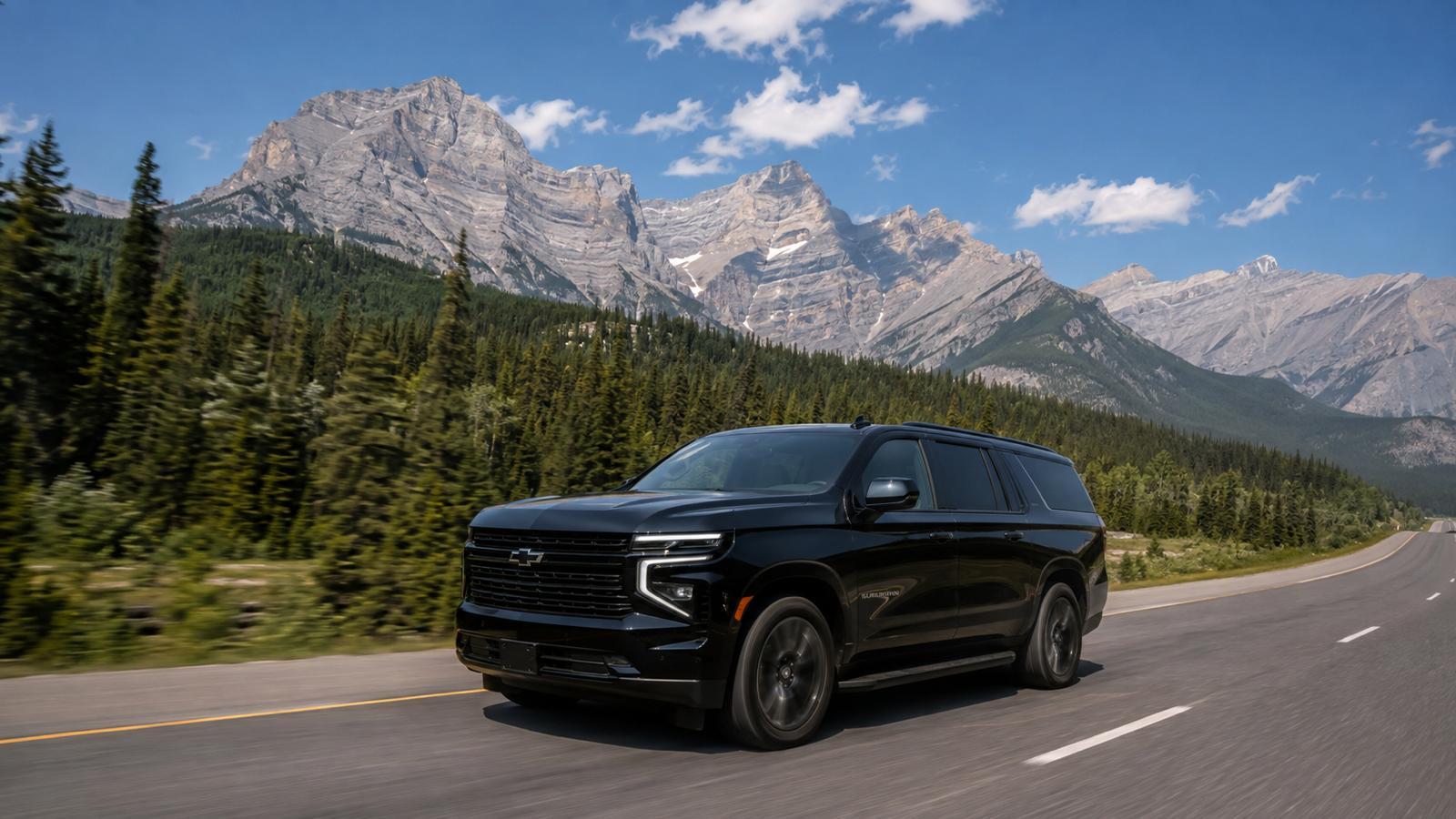
The same road, a different drive
The Trans-Canada Highway between Calgary and Banff is a wide, well-maintained divided highway, and in summer it is one of the easier drives in the country. In winter it is still well maintained, but the conditions on it can change substantially within the length of the journey. Calgary can be dry and clear while the Bow Valley is in active snowfall, and the reverse happens just as often. Planning a winter trip well is mostly a matter of accepting that the road you check before leaving is not necessarily the road you will be on an hour later.
Winter tire requirements on park roads
This is the detail most visitors miss, because it does not apply to the whole route. Parks Canada sets seasonal winter tire and chain requirements on certain mountain park highways, and they run on fixed calendar dates rather than on the day's weather. The Icefields Parkway carries a winter tire or chain requirement from 1 November to 31 March, and the roads through Yoho National Park carry one from 1 October to 30 April. The dates matter: a mild, dry day in mid-October does not exempt a vehicle on a road inside the requirement window. Requirements are reviewed periodically, so confirm the current dates with Parks Canada before travelling.
What counts as a winter tire
The requirement is about the tire, not the season it happens to be. A qualifying winter tire carries either the three-peaked mountain and snowflake symbol or, in some contexts, a mud and snow marking, and it must have adequate tread depth remaining. All-season tires are not the same thing, despite the name, and their rubber compound stiffens noticeably as temperatures drop. If you are arranging your own vehicle for a winter mountain trip, this is worth verifying rather than assuming, particularly with a rental.
The stretch that catches people out
Ask anyone who drives the route regularly and the same section comes up: the descent into the Bow Valley west of the Scott Lake Hill area, where the highway loses elevation and the surface can change character quickly. Shaded sections hold ice long after exposed ones have cleared, and the difference between a wet-looking surface and a genuinely icy one is not always visible at highway speed. Black ice is most common around dawn and dusk, and in the shoulder seasons when daytime melt refreezes overnight.
Checking conditions before you go
Alberta's 511 service publishes current highway conditions, camera feeds and closure information, and Parks Canada publishes road status for the park highways. Both are worth checking on the morning of travel rather than the night before, because conditions in the mountains change on a shorter cycle than that. If you are travelling on the Icefields Parkway in winter, check it specifically: it is a remote highway with limited services, and it closes when conditions require.
Closures happen, and they are not negotiable
Mountain highways close. It is uncommon on the Trans-Canada between Calgary and Banff, more common on the Icefields Parkway, and it happens for avalanche control, collisions and severe weather. When a closure is in place there is no route around it and no operator who can drive through it. Any transportation service that suggests otherwise is telling you something that is not true. PrimeKar runs mountain routes year-round, conditions permitting, and that qualifier is doing real work in the sentence.
Build the buffer into the plan, not the drive
The most common winter mistake is scheduling a mountain trip so tightly that the only way to absorb a delay is to drive faster, which is exactly the wrong response to a deteriorating road. If you have a flight to catch out of YYC after a stay in Banff, plan the departure with genuine margin rather than the theoretical drive time. Ninety minutes is the usual figure for Calgary to Banff; in February, treat it as a starting point rather than a promise.
Daylight is shorter than you expect
In late December, useful daylight in the Bow Valley runs to roughly eight hours, and the mountains bring dusk earlier still by blocking low sun. A day trip that works comfortably in July can involve driving both directions in the dark in winter. If the point of the trip is scenery, plan around the light rather than around the clock, and start earlier than feels necessary.
What a driver changes, and what it does not
Booking a professional driver does not change the weather, the road surface, or whether a highway is open. What it changes is who is responsible for the decisions. A driver who runs these routes regularly is reading conditions continuously, adjusting speed and following distance well before it becomes obvious, and is not doing it for the first time in an unfamiliar rental. For visitors who do not drive in winter conditions at home, that is often the more meaningful consideration, along with the fact that nobody in the vehicle has to spend the journey concentrating on the road.
Planning a winter trip
Check 511 Alberta and Parks Canada on the morning you travel. Confirm the winter tire requirement dates if any part of your route runs through the parks. Give yourself real margin on anything with a flight at the end. Dress for standing outside the vehicle rather than sitting in it, because that is the version that matters if something goes wrong. And if you would rather not drive it yourself, PrimeKar runs the Banff, Canmore, Lake Louise and Jasper routes through the winter, conditions permitting.